
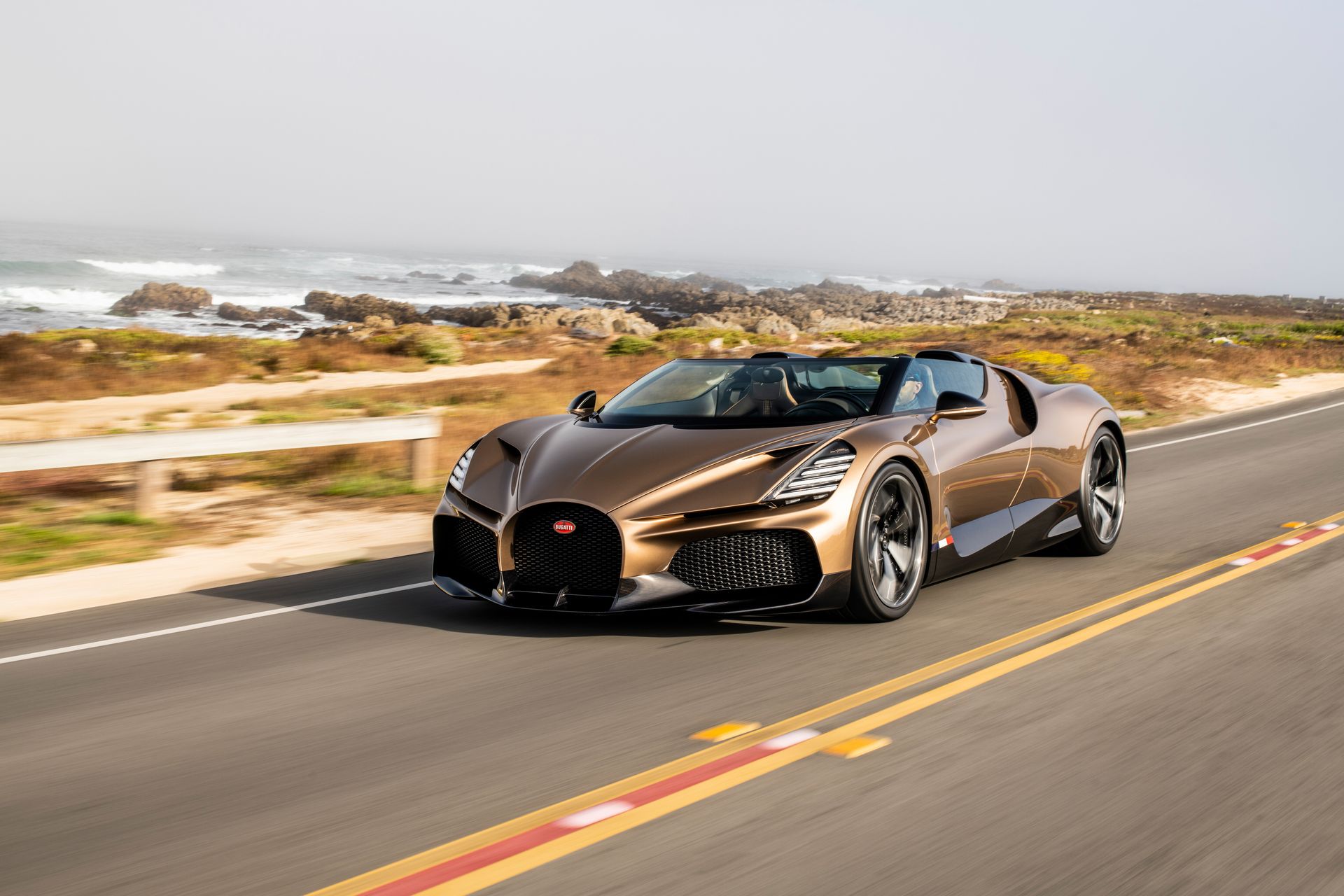
Bugatti Mistral: Dawn of the Hyper Roadster
Introduction
Forget everything you thought you knew about open-top driving. Scratch the image of leisurely cruises on sun-drenched boulevards. The Bugatti Mistral isn’t about gentle breezes and relaxed vibes. It’s about experiencing the raw, untamed power of a W16 engine with nothing but the sky above you. It’s a hurricane with wheels, a symphony of engineering arrogance, and quite possibly, the last of its kind.
Think about it: a hypercar stripped of its roof, a machine built to obliterate speed limits while exposing its occupants to the full fury of aerodynamic forces. It sounds insane, right? But that’s Bugatti for you – perpetually pushing the boundaries of what’s possible, even if it defies logic. The Mistral isn’t just a car; it’s a statement. A bold, unapologetic pronouncement of performance and luxury in an era increasingly defined by electrification and efficiency.
But why now? Why this extreme embodiment of fossil-fuelled excess at a time when the automotive world is rapidly pivoting towards a greener future? That’s the question burning in the minds of enthusiasts and industry observers alike. Is the Mistral a defiant swan song for the legendary W16 engine, a final roar before it fades into the annals of automotive history? Or is it something more – a visionary glimpse into a future where bespoke, performance-focused machines carve out their own niche, catering to a select few who demand the ultimate driving experience, regardless of the environmental impact?
The Short-Term Roar, The Long-Term Echo
In the immediate future, the Mistral is destined to become an instant collector’s item. Limited to just 99 units, each carrying a staggering price tag of around $5 million, it’s an exclusive club for the ultra-wealthy. The short-term impact is clear: it will cement Bugatti’s position as the undisputed king of hypercars, a brand that represents the pinnacle of automotive engineering and design. It will fuel brand aspiration, drawing in customers for their more “accessible” models and reinforcing the image of Bugatti as the manufacturer of dreams.
But what about the long-term? This is where things get more interesting. The Mistral’s existence throws into sharp relief the contradictions facing the automotive industry. On one hand, we have the relentless push towards electric vehicles, driven by stringent emission regulations and growing environmental awareness. On the other, we have the enduring allure of raw power and unbridled performance, a primal desire that resonates deep within the human psyche.
The Mistral challenges the notion that the future of driving is solely electric. It suggests that there will always be a place for vehicles that prioritize experience over efficiency, for machines that are built to thrill and inspire. However, this also raises crucial questions about sustainability and the responsible use of resources.
Navigating the Crossroads: Solutions for a Shifting Landscape
So, how can we reconcile the desire for extreme performance with the need for a more sustainable future? The answer lies in finding a balance between innovation, responsibility, and a healthy dose of realism. Here are a few potential pathways:
- Embrace Sustainable Fuels: One of the most promising avenues is the development and adoption of synthetic fuels (e-fuels) or advanced biofuels. These fuels can be produced using renewable energy and captured carbon dioxide, offering a carbon-neutral alternative to traditional gasoline. Porsche, for instance, is heavily invested in e-fuel technology and believes it could be a viable option for keeping existing combustion engines on the road for decades to come. This allows enthusiasts to enjoy their high-performance vehicles without contributing to the problem of greenhouse gas emissions.
- Hybridization with a Focus on Performance: While full electrification might not be the ideal solution for every hypercar, hybrid technology offers a way to enhance performance while reducing emissions. McLaren’s Artura, for example, combines a V6 engine with an electric motor to deliver blistering acceleration and improved fuel efficiency. By strategically integrating electric power into the powertrain, manufacturers can create hybrid hypercars that offer the best of both worlds: exhilarating performance and a reduced carbon footprint.
- Limited Production and Responsible Ownership: Recognizing the environmental impact of high-performance vehicles, manufacturers can adopt a more responsible approach to production and ownership. This could involve limiting the number of units produced, promoting responsible driving habits, and offsetting the carbon footprint of each vehicle. Brands like Bugatti can partner with environmental organizations to invest in carbon offset projects, ensuring that the environmental impact of their cars is mitigated.
- The “Experience” Model: Shift the focus from everyday usability to curated experiences. Instead of building cars for daily commutes, create exclusive driving programs and track events where owners can fully unleash the potential of their machines in a controlled environment. This minimizes the overall mileage and environmental impact while maximizing the enjoyment and thrill of driving a hypercar. Think of it as a “rent-a-racer” model, but for the ultra-wealthy.
The Road Ahead: Optimism and Action
The Bugatti Mistral might be a symbol of a bygone era, but it also serves as a reminder of the passion, innovation, and artistry that can be found in the automotive world. The challenge now is to channel that passion into creating a future where high-performance driving and environmental responsibility can coexist.
The transition won’t be easy, and there will be compromises along the way. But by embracing new technologies, adopting responsible practices, and fostering a spirit of innovation, we can ensure that the thrill of driving a hypercar doesn’t become a thing of the past.
The Mistral is not just a car; it’s a conversation starter. It’s a catalyst for change. It’s a reminder that even in a world that’s rapidly evolving, the pursuit of excellence and the thrill of the open road will always hold a special place in our hearts. So, let’s take action, embrace the challenge, and work together to build a future where the dawn of the hyper roadster can continue to shine, responsibly and sustainably. The roar may evolve, but the passion for driving must endure.